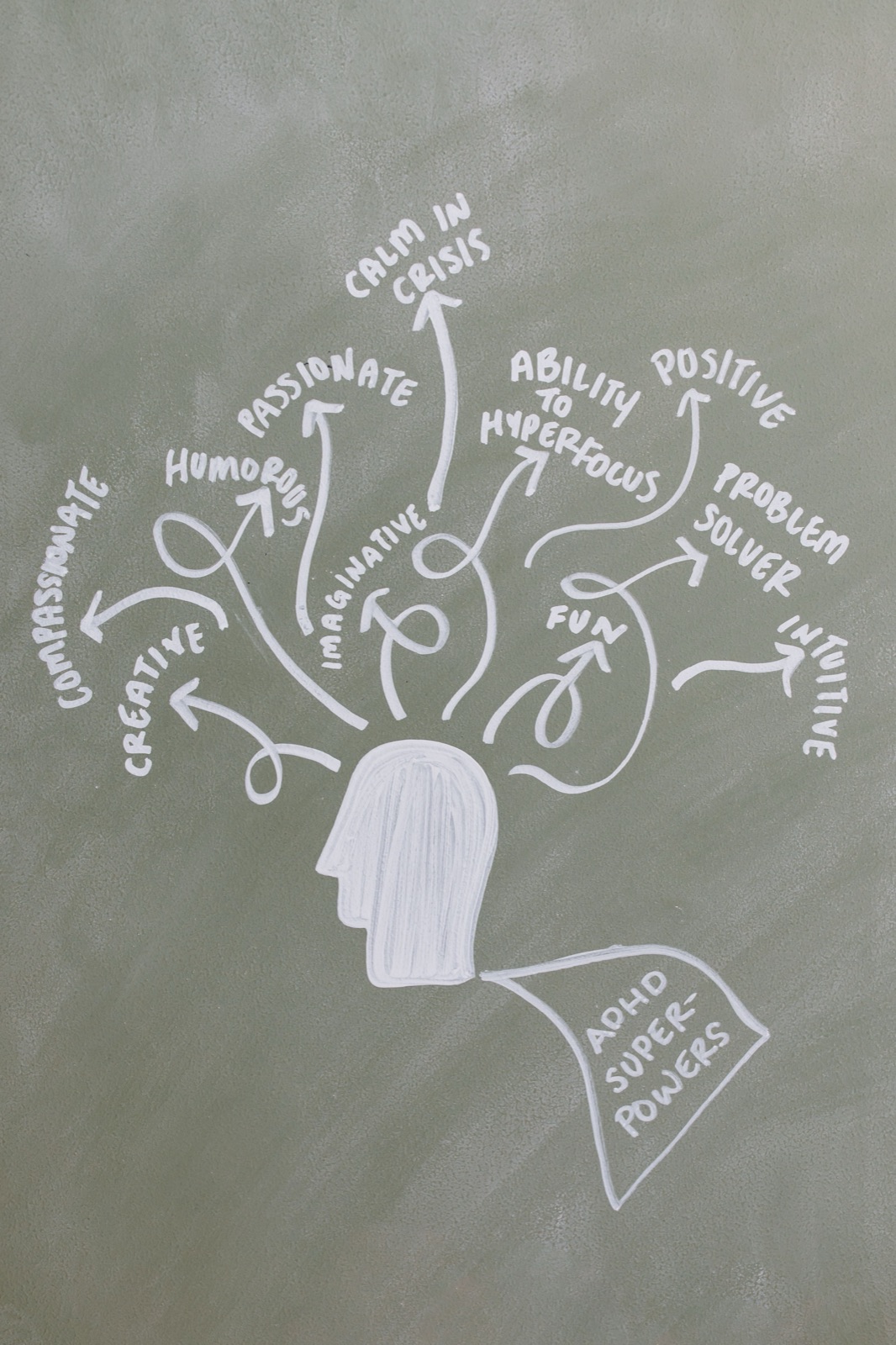
Key points
- ADHD (attention-deficit/hyperactivity disorder) is a neurodevelopmental condition. It begins in childhood, and for many people it continues into adult life.
- It is diagnosed in three presentations: predominantly inattentive, predominantly hyperactive-impulsive, and combined. In adults, hyperactivity often looks like inner restlessness rather than constant movement.
- Adult ADHD is less about occasional distraction and more about persistent patterns, such as trouble starting, organizing and finishing tasks, that cause real problems at work, at home or in relationships.
- Many adults are diagnosed for the first time in adulthood. In a 2023 US national survey, about half of adults with a current ADHD diagnosis had received it at age 18 or older.
- Anxiety, depression, sleep problems and stress can look like ADHD or occur alongside it. Only a clinical evaluation can tell them apart.
What adult ADHD is
ADHD is a neurodevelopmental condition, meaning it affects how the brain develops and works from early in life. It is defined by a persistent pattern of inattention, hyperactivity-impulsivity, or both, that is out of step with a person's age and interferes with daily functioning.
It is not a character flaw, a lack of intelligence or a result of poor effort. Many adults with ADHD are capable and hard-working; the difficulty is that getting their ability onto the page, on time and consistently, costs far more effort than it does for others.
ADHD is also common. In a 2023 national survey by the Centers for Disease Control and Prevention's National Center for Health Statistics, an estimated 6.0% of US adults, about 15.5 million people, reported a current ADHD diagnosis, and roughly half of them had been diagnosed as adults.
The three presentations
The diagnostic manual used in the United States, the DSM-5-TR, describes ADHD in three presentations. The word “presentation” is deliberate: the pattern that fits best can change over a lifetime.
- Predominantly inattentive. Mainly problems with attention, organization and follow-through, without much hyperactivity. This presentation is easily missed, especially in people who were quiet at school.
- Predominantly hyperactive-impulsive. Mainly restlessness, difficulty waiting and acting or speaking before thinking.
- Combined. Enough symptoms of both kinds to meet the criteria for each.
“ADD” is an older name. The 1980 edition of the manual used “attention deficit disorder,” with or without hyperactivity; since 1987 the official term has been ADHD, and what people often mean by ADD is now called the predominantly inattentive presentation. For more, see ADD vs. ADHD in adults.
What the symptoms look like in adults
The diagnostic criteria were written with children in mind, so it helps to translate them into adult life. The examples below are illustrations of how symptoms can show up, not a checklist for self-diagnosis. Almost everyone recognizes some of them; what matters clinically is how persistent, widespread and impairing they are.
Inattention
- Careless mistakes in work that you understand well
- Drifting off in meetings, reading or conversations, then having to catch up
- Starting projects with energy and leaving many unfinished
- Chronic difficulty organizing tasks, files, time and finances
- Avoiding or putting off tasks that need sustained mental effort, such as reports, forms and taxes
- Regularly losing keys, phone, wallet or paperwork
- Being easily pulled off task by noise, notifications or your own thoughts
- Forgetting appointments, bills and commitments
Hyperactivity and impulsivity
- Fidgeting, or finding it uncomfortable to sit through long meetings, meals or films
- A constant inner restlessness or a mind that “won't switch off”
- Talking a lot, finishing others' sentences or interrupting
- Finding it hard to wait in lines, in traffic or for your turn to speak
- Quick decisions about purchases, jobs or commitments that you later regret
Hyperactivity in particular tends to change shape with age. The child who could not stay in their seat may become an adult who chooses active jobs, overbooks their week or feels restless when things are quiet.
ADHD starts in childhood, even when it is noticed later
A diagnosis of ADHD requires that several symptoms were present before age 12. That does not mean you must have been diagnosed as a child. Many adults were not, often because:
- They had the inattentive presentation and were not disruptive in class
- Intelligence, a structured home or school, or a lot of extra effort compensated for a long time
- Their difficulties were put down to personality, laziness, anxiety or “not applying themselves”
- ADHD was less recognized, particularly in girls, when they were young
Symptoms often become obvious in adulthood when external structure falls away or demands rise: leaving home, college, a promotion, a first child, or managing a household. The ADHD was there before; the scaffolding that hid it was removed. See signs of ADHD often mistaken for personality traits.
Attention problems that start for the first time in adulthood, with no history in childhood, need a different explanation looked for, such as a mood or anxiety disorder, a sleep problem, a medical condition or a medication effect. That is covered in the ADHD, anxiety and related conditions hub.
Executive function: the everyday engine
Much of what makes adult ADHD hard is best described as trouble with executive function: the mental skills that let you plan, prioritize, start, keep track of and finish things. They include:
- Task initiation. Getting started, especially on tasks that are boring, unclear or large.
- Working memory. Holding information in mind while you use it, such as a phone number, the next step of instructions, or why you walked into a room.
- Planning and organization. Breaking a goal into steps and putting them in order.
- Time management. Sensing how long things take and how much time is left, sometimes called “time blindness.”
- Self-monitoring and shifting. Noticing you are off track and switching tasks when needed.
Executive difficulties are not unique to ADHD, but they are central to how it is experienced. Read more in executive dysfunction in adults with ADHD and the ADHD in daily life hub.
Emotional regulation
Many adults with ADHD describe strong, fast emotional reactions: frustration that flares quickly, low tolerance for boredom or waiting, and taking criticism very hard. Emotional dysregulation is not one of the formal diagnostic criteria, but it is widely recognized as a common and impairing feature of ADHD in adults.
It matters for two reasons. It can strain work and relationships as much as inattention does, and it can make ADHD look like a mood disorder, or hide one. Separating the two is part of a careful evaluation. See emotional dysregulation in adults with ADHD.
When symptoms become impairment
Everyone loses their keys and procrastinates sometimes. ADHD is diagnosed only when symptoms are persistent, show up in more than one area of life, and clearly interfere with functioning. In adults that can look like:
- Repeated problems at work despite effort: missed deadlines, uneven performance, frequent job changes
- Unfinished education or training
- Late bills, fees, debt or impulsive spending
- Friction with partners, family or friends over forgetfulness, lateness or not listening
- Speeding, traffic tickets or near misses when driving
- A long-standing sense of underachieving, and the low self-esteem that follows
Large surveys have found that adult ADHD is associated with substantial difficulties in daily roles and often occurs alongside other conditions, and that many adults with ADHD have never been treated for it. See what untreated ADHD can look like in adults.
Common myths about adult ADHD
| Myth | What is actually true | Why it matters |
|---|---|---|
| ADHD is a childhood condition people grow out of | For many people it continues into adulthood, although it may look different | Adults are often told they are too old for ADHD and go without help |
| If you can focus on things you enjoy, you can't have ADHD | ADHD affects the regulation of attention, not the total amount of it. Interesting tasks can hold attention easily | Intense focus on hobbies is often used, wrongly, to rule ADHD out |
| Successful people don't have ADHD | Many capable, high-achieving adults have ADHD and compensate with extra effort, long hours or support | The cost of compensating, such as exhaustion and burnout, is easy to miss |
| ADHD is just a lack of discipline | It is a recognized neurodevelopmental condition with a strong genetic component | Blame and shame keep people from seeking evaluation |
| Everyone is a little ADHD these days | Distraction is universal; ADHD requires persistent symptoms since childhood that cause real impairment | Overuse of the label can trivialize it, and underuse can leave it unrecognized |
Hyperfocus: what it is and what it isn't
Many adults with ADHD describe “hyperfocus”: becoming so absorbed in something engaging that hours pass, meals are missed and other obligations are forgotten. It is a common experience, but it is not a diagnostic criterion, and research on it is still limited.
Hyperfocus is best understood as another sign of difficulty regulating attention: not being able to direct it where it is needed, and not being able to pull it away once it is caught. It is not proof that someone does not have ADHD, and on its own it is not proof that they do.
Can ADHD change with age?
Yes, in several ways. Visible hyperactivity often lessens after childhood, while inattention and executive difficulties tend to persist. Some people find their symptoms become less impairing as they choose work and routines that suit them; others find them more impairing as responsibilities grow.
Life stages can also shift things. Hormonal changes, including around perimenopause, sleep changes, new health conditions and some medications can all affect attention and memory, which is why new or worsening symptoms in later life deserve careful evaluation rather than assumptions. See the ADHD in women and across adulthood hub.
When to consider an evaluation
It may be worth speaking with a clinician about an ADHD evaluation if:
- Problems with attention, organization or restlessness have been with you since childhood
- They affect more than one part of your life, such as work and home, not just one situation
- You have tried hard to fix them on your own and the same patterns keep returning
- Someone close to you, or a relative with ADHD, has suggested it
- You are being treated for anxiety or depression and attention problems remain even when your mood improves
Guides in this hub
- What is ADD / ADHD In Adults?
Learn what ADD and ADHD mean, how the terms differ and how ADHD can affect adults in everyday life.
- ADD vs. ADHD in Adults: Is There Actually a Difference? A NYC Psychiatrist Explains
Learn the difference between ADD and ADHD and how these terms are understood when discussing adult attention difficulties.
- Understanding ADHD in Adults: Symptoms, Diagnosis & Treatment
Understand adult ADHD symptoms, how diagnosis works and the treatment options available for adults.
- Understanding ADHD in Adults: Symptoms, Diagnosis, and Treatment Options
Get a clear overview of adult ADHD, including common symptoms, the diagnostic process and available treatment approaches.
- Signs of ADHD in Adults That Are Often Mistaken for Personality Traits
Learn about ADHD-related behaviors in adults that may be mistaken for personality traits, habits or lack of effort.
- What Does Untreated ADHD Look Like in Adults? Signs You Shouldn’t Ignore
Learn about common signs of untreated ADHD in adults and how ongoing attention and executive function difficulties may affect daily life.
- Emotional Dysregulation ADHD Adults: What It Looks Like and How to Manage It
Learn how emotional dysregulation can affect adults with ADHD and how it may appear in everyday situations.
- What Is Executive Dysfunction in Adults with ADHD? Signs, Causes & Treatment
Learn what executive dysfunction is, how it affects adults with ADHD, common symptoms, causes, diagnosis, and treatment options to improve daily life.
Questions
Is ADD different from ADHD?
ADD is an older name. Since 1987 the official diagnosis has been ADHD, and what many people mean by ADD is now called the predominantly inattentive presentation of ADHD.
Can you develop ADHD as an adult?
ADHD begins in childhood, and a diagnosis requires several symptoms before age 12. Many adults are first diagnosed later because their symptoms were overlooked or compensated for. Attention problems that truly start in adulthood usually point a clinician toward other explanations first.
Is ADHD genetic?
ADHD runs strongly in families, and research indicates a large genetic contribution. Having a parent, sibling or child with ADHD is a common reason adults seek their own evaluation.
If I have some of these symptoms, do I have ADHD?
Not necessarily. Many of these experiences are common, and several other conditions cause similar problems. A diagnosis depends on how long symptoms have been present, how many settings they affect, how much they interfere, and whether something else better explains them. That takes a clinical evaluation.
Sources
- American Psychiatric Association. What is ADHD?
- National Institute of Mental Health. Attention-Deficit/Hyperactivity Disorder.
- National Institute of Mental Health. ADHD: What You Need to Know.
- Staley BS, et al. ADHD diagnosis, treatment, and telehealth use in adults: National Center for Health Statistics Rapid Surveys System, 2023. MMWR, 2024.
- Faraone SV, et al. The World Federation of ADHD International Consensus Statement: 208 evidence-based conclusions about the disorder. Neurosci Biobehav Rev, 2021.
- Kessler RC, et al. The prevalence and correlates of adult ADHD in the United States: results from the National Comorbidity Survey Replication. Am J Psychiatry, 2006.
- National Institute for Health and Care Excellence (NICE). Attention deficit hyperactivity disorder: diagnosis and management (NG87).
- CHADD. Adults with ADHD: overview.